What the Bible Actually Says About Burnout
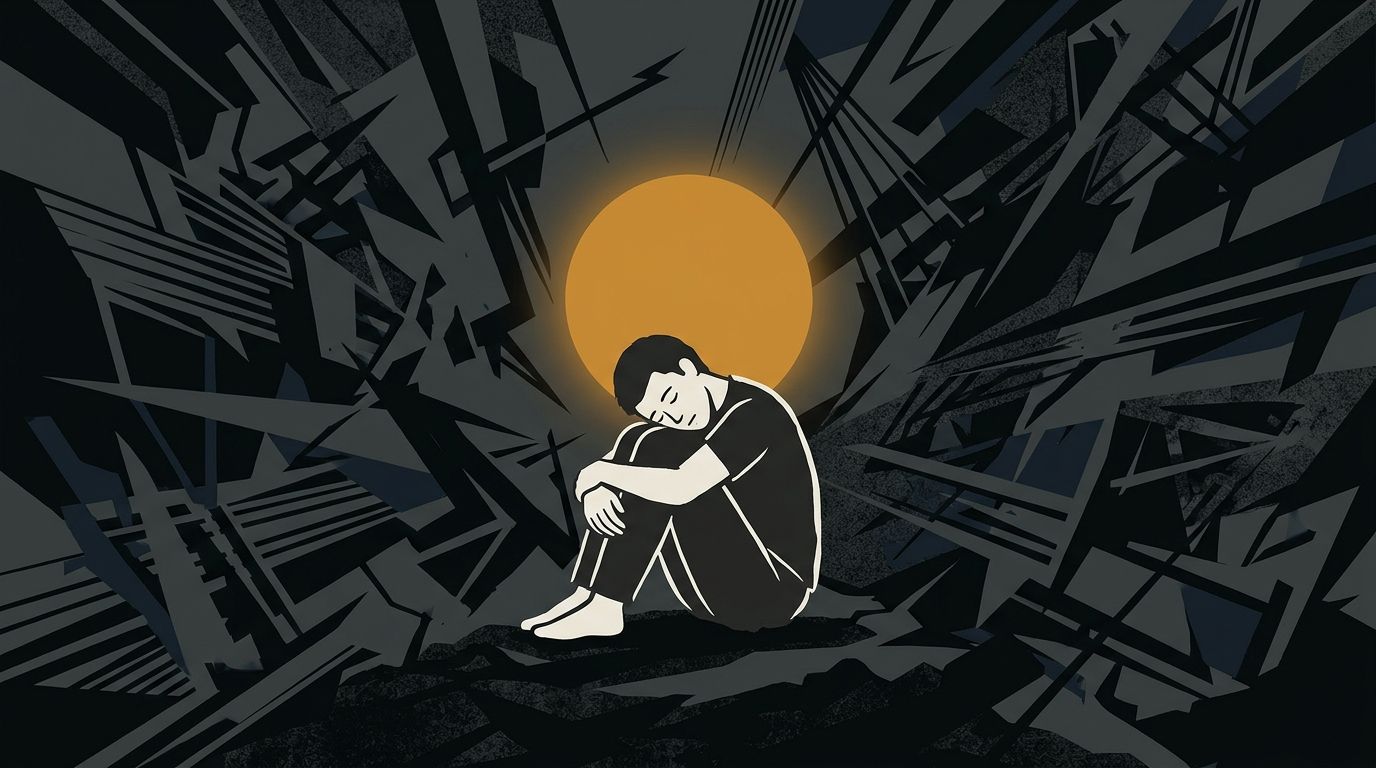
There is a kind of tiredness that sleep does not fix.
You have probably felt it. The alarm goes off and you are already exhausted before the day has started. The work gets done, just about, but the margin has gone. You are functioning, technically, but something underneath the functioning has gone quiet. Not dramatic. Not a crisis, exactly. Just a slow, cumulative hollowing out that a long weekend or a productivity app cannot quite reach.
This is burnout. And if you are living with it, you are not alone, and you are not weak. A 2025 survey by Talker Research of 2,000 American adults found that Gen Z and millennials hit their peak burnout at just 25 years old, a full 17 years ahead of previous generations. Separate data from Eagle Hill Consulting puts the burnout rate among millennials at 58%. The pace of modern life is running faster than the people inside it were ever built to go. If you feel like you cannot keep up, it may be because the pace itself is the problem, not you.
What you might not expect is that the Bible understands this exhaustion intimately. Not in the language of wellness trends or productivity hacks, but through the stories of real people who hit the wall, and a God who met them there with more tenderness than they were expecting.
You Are Not the First to Feel This
It is tempting to think of burnout as a modern invention, the product of smartphones and inboxes that never close. And the always-on pressure is real. But the experience of being completely spent, of reaching the end of yourself and finding nothing left, runs right through Scripture.
Elijah knew it. He had just had the greatest day of his career: standing on a mountain, seeing fire fall from heaven, watching God answer prayer in the most dramatic way imaginable. And then, almost immediately afterward, he ran into the wilderness, sat down under a solitary tree, and asked God to let him die. 'It is enough,' he said (1 Kings 19:4). The man who had everything going for him was suddenly empty, depleted, done.
If you have ever achieved the thing you worked for and felt nothing, or crashed hard right after a high point, Elijah's story is for you. The Bible does not hide his collapse or tidy it up. It puts it right there on the page, because someone, somewhere, was always going to need to know that even the great prophet ended up face down in the dirt, and that this was not the end of his story.
The Psalms are full of the same honesty. 'My strength fails,' writes David (Psalm 31:10). 'I am weary with my crying out; my throat is parched' (Psalm 69:3). These are not people who have lost their faith. They are people of deep faith being truthful about how exhaustion actually feels, and bringing that truth straight to God, certain that He could handle it.
What God Did Not Say to Elijah
Here is the part of Elijah's story that I most want you to notice.
When God came to him under that tree, there was no lecture. No reminder of how much Elijah had just accomplished. No 'pull yourself together' or 'where is your faith?' None of the things we so often say to ourselves when we are running on empty.
Instead, an angel arrived. The angel touched him gently and said: get up and eat. There was warm bread and a jar of water. Elijah ate, and then he lay back down and slept some more. The angel came a second time, with the same kindness: eat, 'for the journey is too great for you' (1 Kings 19:7).
The journey is too great for you. Not as an accusation. As simple, compassionate truth. What you are facing is genuinely heavy, and you cannot do it on empty, so here is food and here is rest, and we will not talk about the road ahead until you have had both.
That is who God is. He did not wait for Elijah to recover before drawing near. He came while Elijah was still at his lowest, and the first thing He offered was not a strategy. It was care. If you take nothing else from this, take that: the God of the Bible meets exhausted people with bread before instructions, with rest before requirements, with kindness before anything is fixed.
The Invitation Jesus Makes to Tired People
Jesus said something to the worn-out people of His day that He is still saying now: 'Come to me, all who labour and are heavy laden, and I will give you rest' (Matthew 11:28).
He said this not from a comfortable distance but in the middle of His own difficult season, when towns were rejecting Him and His friend John had been thrown in prison. He knew what pressure felt like. And from inside that, He turned to the exhausted and the overburdened and said, simply: come to me.
Not come to my system. Not come back when you have rested and got yourself sorted. Come, now, as you are, heavy and tired and unsure. He goes on: 'learn from me, for I am gentle and lowly in heart, and you will find rest for your souls' (Matthew 11:29).
Gentle and lowly. That is how He describes Himself to people who are bracing for criticism. Not demanding. Not disappointed. Gentle. The rest He offers is not a quick fix or a better schedule. It is the deep relief of being with someone who is genuinely kind, who does not measure your worth by what you got done today.
Rest Was Always Part of the Plan
One of the most freeing things in the whole Bible is something that appears right at the start. After making the world, on the seventh day, God rested, and He made that day of rest holy (Genesis 2:2-3). Rest was not an afterthought or a reward for good behaviour. It was woven into the fabric of how life was meant to work from the very beginning.
This cuts against almost everything our culture assumes. Most of us live as though rest is what is left over once the work is done, which means, since the work is never quite done, that rest barely happens at all. The rise of AI tools has quietly sharpened the pressure: if a machine can run through the night without tiring, the unspoken message becomes that there is no longer any natural limit to how much you should produce.
But you are not a machine, and you were never meant to run like one. Jesus put it plainly: rest 'was made for man' (Mark 2:27). It is a gift held out to you, not a luxury you have to justify. Taking it is not laziness. It is trusting that the world can hold together for a day without you carrying it, because it was never your strength holding it together in the first place.
The Quiet Thing Underneath the Tiredness
Let me name something gently, because it sits underneath a lot of burnout and rarely gets said out loud.
Sometimes we cannot stop because stopping feels dangerous. If so much of your sense of being worth something is tied to what you produce, then slowing down threatens the very thing that makes you feel okay about yourself. So you push on, long after your body and your soul have asked you to stop, because rest feels like it might expose a fear you would rather not face: that without the output, you are not enough.
If any of that lands close to home, here is what I want you to hear. Long before you did anything at all, you were already loved. The God who 'knitted me together in my mother's womb' (Psalm 139:13) decided you were worth making, worth delighting in, worth dying for, before you had achieved a single thing. Your worth before God was not earned and cannot be forfeited. What burnout cannot touch is this: you were loved before you did anything. God's love does not waver. The good news is that He is the one who comes looking.
You do not have to earn your way back to being okay. You are already held.
Where to Begin
None of this asks you to fix everything today. It just invites you to take one small step toward the One who is already reaching for you.
Tell Him the truth about how tired you are. Not the polished version, the real one. He is not put off by it.
And you do not come to Him alone. When we have nothing left with which to pray, the Holy Spirit intercedes for us 'with groanings too deep for words' (Romans 8:26). You do not need the right words. The Spirit carries even wordless exhaustion to the Father.
Let yourself rest, and let the guilt go with it. The angel fed Elijah and let him sleep before asking anything of him. The same permission is yours.
And gently ask the bigger question underneath: what have I been carrying that was never mine to carry alone? Then begin, slowly, to hand it back to the God who is far stronger and far kinder than the voice that has been driving you.
Here is the thing I most want you to hold onto, if you have read this far while running on empty. The God who met Elijah under that tree did not wait for him to recover first. He came while Elijah was still face down, still asking to die, and the first thing He offered was bread, and sleep, and the company of someone who was not going anywhere.
That same gentleness is turned toward you right now. Not the version of you that has it together, but you, today, tired in the way sleep does not touch. He is not tapping His foot, waiting for you to sort yourself out. He is already near, already kind, already willing to carry what you cannot.
You are allowed to put it down. You are allowed to rest. And when you have nothing left to bring, that turns out to be exactly the place where He meets you most tenderly.
Come and rest. There is room.
Frequently Asked Questions
Is burnout a sin?
No. Burnout is not a moral failure or a sign of weak faith. It is what happens when human limits are pushed past their breaking point, often by pressures you did not choose. All through the Bible, God meets exhausted people with compassion rather than blame. You are not in trouble with God for being tired. That said, what drives us into burnout is worth examining, the need to prove ourselves, the refusal to trust God with outcomes. John Owen called this practical unbelief: striving as though everything depends on us because we have not truly rested in God.\
Does God care that I am burned out?
Deeply. When Elijah collapsed and asked to die, God's response was food, rest, and gentle company, not a telling-off. When Jesus saw worn-out crowds, He felt compassion for them. Your exhaustion is not invisible to God, and it does not make you a disappointment to Him.
Can prayer actually help with burnout?
Prayer is not a magic trick that makes tiredness vanish, but it is the way you bring your real, depleted self to a God who genuinely cares. Many people find that simply telling God the truth about how empty they feel, without dressing it up, begins to lift the sense of carrying it all alone. Sometimes the most honest prayer is just, 'I have nothing left.' That is enough.
What is the difference between being tired and being burned out?
Ordinary tiredness usually lifts after some rest. Burnout goes deeper. It affects your emotions and your sense of meaning, not just your energy, and it does not lift with a single good night's sleep. If you feel numb, detached, or unable to care about things that used to matter, it is worth taking seriously and worth talking to someone you trust, whether a friend, a pastor, or a professional.
Does the Bible talk about work-life balance?
Not in those words, but the idea of Sabbath speaks right to it. One day of rest in every seven is not a productivity tip. It is God's way of saying you are a person, not a machine, and your worth was never meant to rest on how much you get done. Rest is built into the design of your life on purpose.
Come and rest, there is room.
Take this into prayer
Join the global prayer movement.
Connect with thousands of believers worldwide interceding for the nations.
Enter the Prayer Room